
The Swiss Confederation explained simply
The Swiss Confederation has shaped Switzerland’s history with its origins, traditions and the unique cohesion between the cantons.
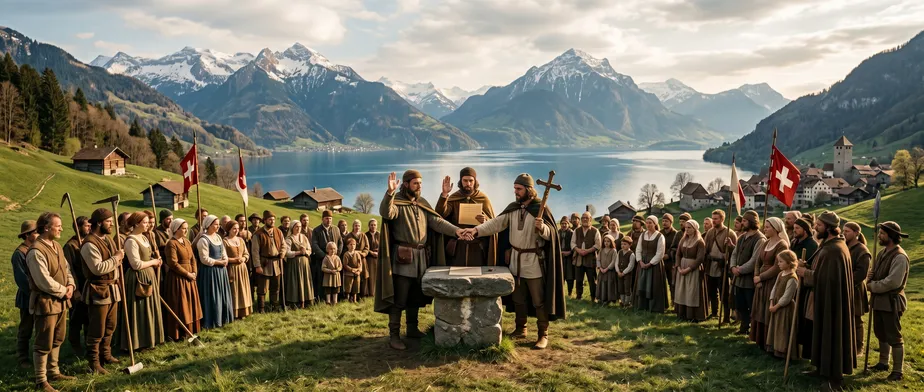
Anyone travelling through Switzerland will soon come across a term that reveals a lot about the country: Swiss Confederation. The word sounds historical, yet it is still very present today. It appears in conversations, in official names and again and again in connection with Swiss history. If you understand its meaning, you also understand Switzerland much better.
The term “Confederates” goes back to a shared oath. It refers to a solemn promise between partners who want to support one another and protect common interests. The Confederation was therefore not originally a modern state but an alliance. Several communities joined forces to secure their freedom and stand firm against external pressure.
How the Swiss Confederation emerged
It all began with the union of individual valleys and settlements in the area of present-day Switzerland. These early alliances did not arise from a grand political vision but from practical needs. People wanted to secure routes, preserve their rights and protect themselves from foreign influence. The shared oath became a symbol of trust, reliability and solidarity.
Over time, these first ties evolved into a loose network of alliances. One place after another joined. The Confederation did not appear overnight but grew step by step. This gradual growth still shapes its history today. It is less the story of a centrally founded state and more the story of a union that slowly developed.
Why Swiss people are also called Confederates
The name points directly to this shared historical root. Swiss people are called Confederates because their political tradition grew out of such oaths and alliances. The word is therefore more than an old label. It stands for a sense of identity that emphasises independence, participation and cohesion.
Even today the term carries a strong feeling of community. At the same time it serves as a reminder that Switzerland consists of different regions, languages and cultural areas. This is precisely why the common alliance had a special meaning from the very beginning.
From alliance to modern Switzerland
Over the centuries, the Confederation has changed again and again. The union of individual places gradually turned into a more solid political system. This path was not straightforward. Conflicting interests, strong regional autonomy and political upheavals shaped its development.
Today’s Switzerland combines modern state structures with a strong federal tradition. Many decisions are still taken close to the regions, cantons and municipalities. This shows a clear link to the old Confederation. The basic idea of an alliance is still alive, even if the political form is now different.
Why this matters for travellers
For visitors, the history of the Confederation is more than a historical detail. It helps explain why Switzerland places such strong emphasis on regional identity, local responsibility and shared rules. You can experience this diversity directly when you travel.
- Many regions have a clearly distinctive character.
- Traditions are actively preserved in many places.
- Cohesion despite great diversity is still tangible today.
When you travel through towns, villages and mountain regions, you quickly gain a sense of what the Confederation stands for. The term refers not only to history but also to the country’s present.
So when you hear people in Switzerland talk about Confederates, there is a long story behind it. It refers to a country that grew out of alliances and still values community and autonomy very highly. This is why the Confederation is far more than a historical term. It is a key to understanding Switzerland.
More articles
Swiss inventions that changed the world
Whether in everyday life, technology or research: many Swiss inventions have had a global impact and still shape our lives today.
Discover Pilgrimage Sites and Monasteries in Switzerland
Switzerland captivates with pilgrimage sites, monasteries, pilgrimage routes and spiritual places set amid impressive mountain landscapes.
Winter Festivals and Advent Traditions in Switzerland
Switzerland captivates visitors with Advent traditions, Christmas markets and winter customs in the Alps, all set in a festive, atmospheric landscape.
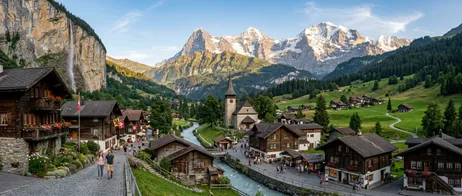
Historic Towns and Villages in the Swiss Mountain Region
Switzerland captivates with historic towns, alpine villages and traditional mountain culture set between dramatic peaks and preserved old quarters.
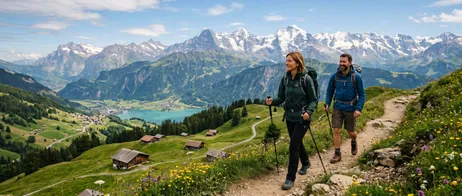
Discover Switzerland as a Hiking Paradise
Switzerland is a diverse hiking destination with varied routes, impressive nature experiences and distinctive landscapes in the Alps and Pre-Alps.
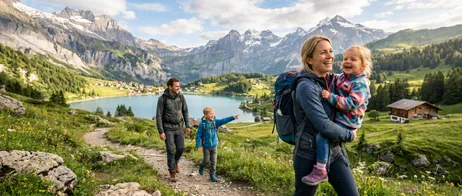
Family holidays in Switzerland full of adventure
Family holidays in Switzerland: Discover theme parks, nature experiences and varied excursions with children for relaxed yet active vacation days.
